
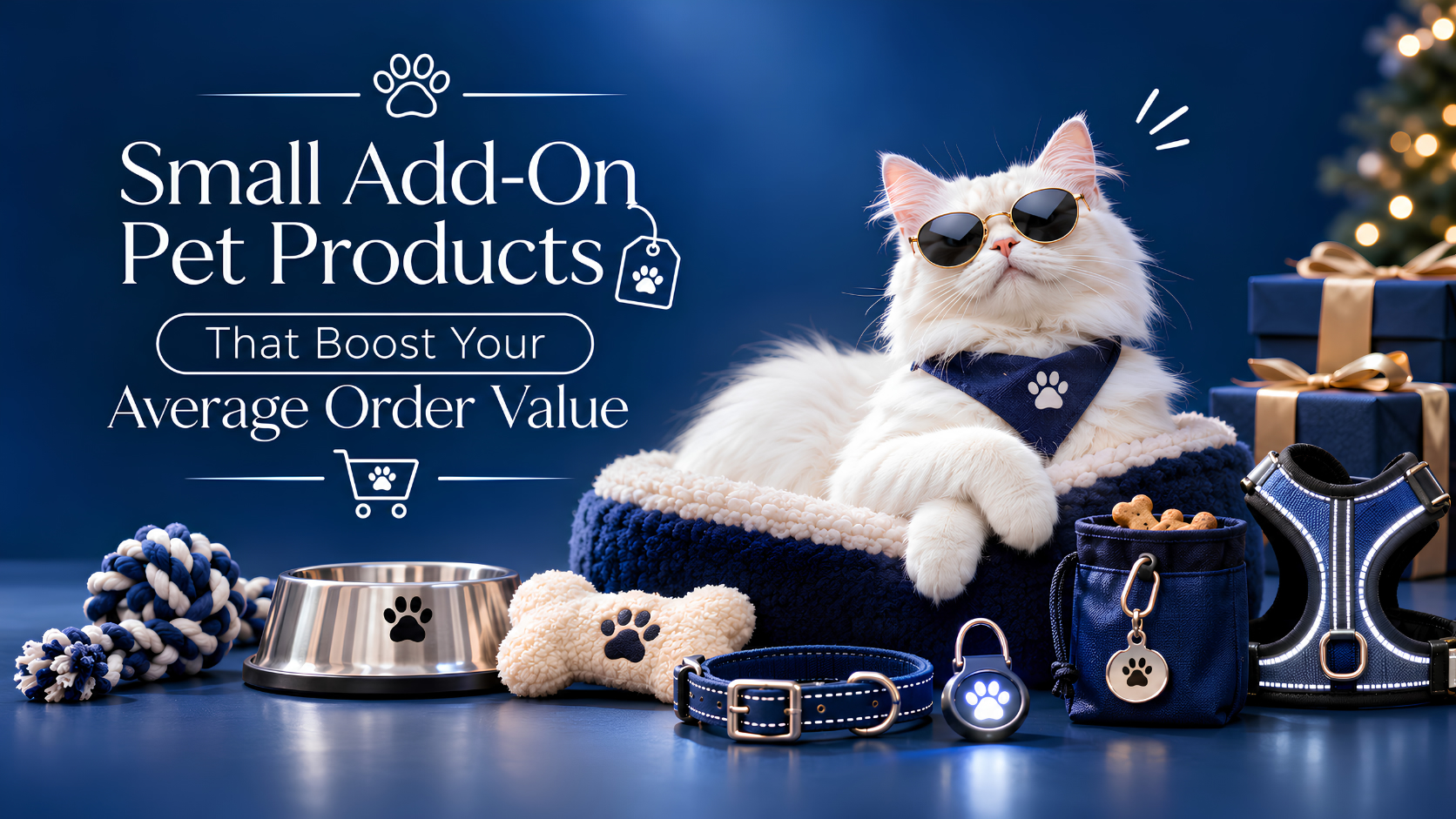
Most pet retailers spend a lot of energy chasing new customers. It makes sense, but there’s a quieter way to grow: getting the customers you already have to add one more small item to their basket.
That’s what add-on products do. They’re the little extras near the till or just below the “add to cart” button, and they can lift your average order value without any aggressive selling. Here’s how to choose them and how to make them work.
What makes a good add-on product
Not every cheap item makes a good add-on. The best ones share a few traits:
A pet owner buying a harness is happy to add a poo bag holder. The same person probably won’t add something unrelated just because it’s cheap.
Add-ons that tend to work well
Here are some reliable categories that suit most pet shops.
ID tags and tag accessories. Almost every dog needs one, and many owners forget until they’re reminded. Silent tag covers and small clips are easy extras too.
Poo bag holders and refills. Practical, inexpensive and bought repeatedly. They also come in lots of colours and designs, so they can match a lead or harness.
Treat pouches. Useful for training and walks, and a natural pairing with leads. They’re popular with new puppy owners especially.
Clip-on lights and reflective accessories. With darker evenings, safety items sell themselves. A small light on a collar is an easy yes.
Small toys and chews. A single toy by the till is a classic impulse buy, especially if the dog is with the owner at the time.
Grooming extras. Mini brushes, wipes and paw cleaners are low-cost items that solve everyday mess.
Travel items. Collapsible bowls and water bottles suit owners who walk far or travel, and they’re light enough to ship easily.
Placement is half the job
Even the best add-on does nothing if nobody sees it. In a physical shop, place small items where customers naturally pause: by the till, at the end of aisles and next to the main product they complement. A basket of treat pouches beside the leads works better than the same pouches in a far corner.
Online, the same thinking applies:
The goal is a gentle nudge, not a pop-up war.
Bundles make the decision easier
Sometimes customers like add-ons but don’t want to think about choosing. A bundle solves that. A “new puppy starter kit” with a lead, tag, poo bag holder and small toy gives them everything in one go, and it often feels like better value than buying each item separately.
Bundles also help you move slower-selling items alongside popular ones, without discounting heavily. Just make sure the bundle price still protects your margin.
Use a threshold to encourage bigger baskets
Free delivery thresholds are a simple way to encourage extra items. If your free delivery starts at a certain amount, customers just below it will often add a small product to qualify. Small accessories fit this perfectly, because they let someone reach the threshold without feeling like they’ve overspent.
Suggest add-ons in the basket with a message like “Add a little extra to qualify for free delivery”. It’s friendly, honest and effective.
Keep your margins healthy
Small products can have strong margins, and that’s part of their appeal. But it’s worth checking the numbers carefully. A very cheap item that takes up shelf space, needs lots of handling or arrives in awkward packaging might not be worth it.
Look at:
If an add-on sells steadily and costs little to store, it’s earning its place.
Think seasonally
Add-ons also work well as seasonal extras. In winter, reflective items and paw balms make sense. Around Christmas, small festive toys and stocking fillers practically sell themselves. In summer, cooling accessories and travel bowls take over. Rotating your add-ons keeps the shelf fresh and gives regular customers something new to notice.
Don’t overcrowd
It’s tempting to fill every spare inch with small products. Resist it. Too many choices make customers hesitate, and a cluttered till area looks untidy. Pick a handful of strong performers and keep the display tidy. If something isn’t selling after a few weeks, swap it out.
Listen to your customers
Your own customers are the best guide. Notice what people ask for at the till, what they pick up and put back, and what they mention in passing. Those small clues often point to the next great add-on.
A quick add-on checklist
Before adding a product to your range as an extra, ask:
Final thoughts
Growing a pet business doesn’t always mean finding more customers. Often it means helping the ones you already have find a little more value in their basket. Choose useful, affordable add-ons, place them thoughtfully and keep your range tidy, and those small sales will add up faster than you’d expect.
If you’d like to stock quality pet accessories that work well as everyday essentials and easy extras, browse the wholesale range at Captain Retail.